Home services websites
Your next customer is standing in a hallway with a problem.
Home services is the most urgency-driven local category there is. Someone with water spreading across a floor is not evaluating your brand story — they are scanning one-handed on a phone for whoever looks most reliable and easiest to reach. Every second of load time and every extra tap is a customer your competitor books instead.
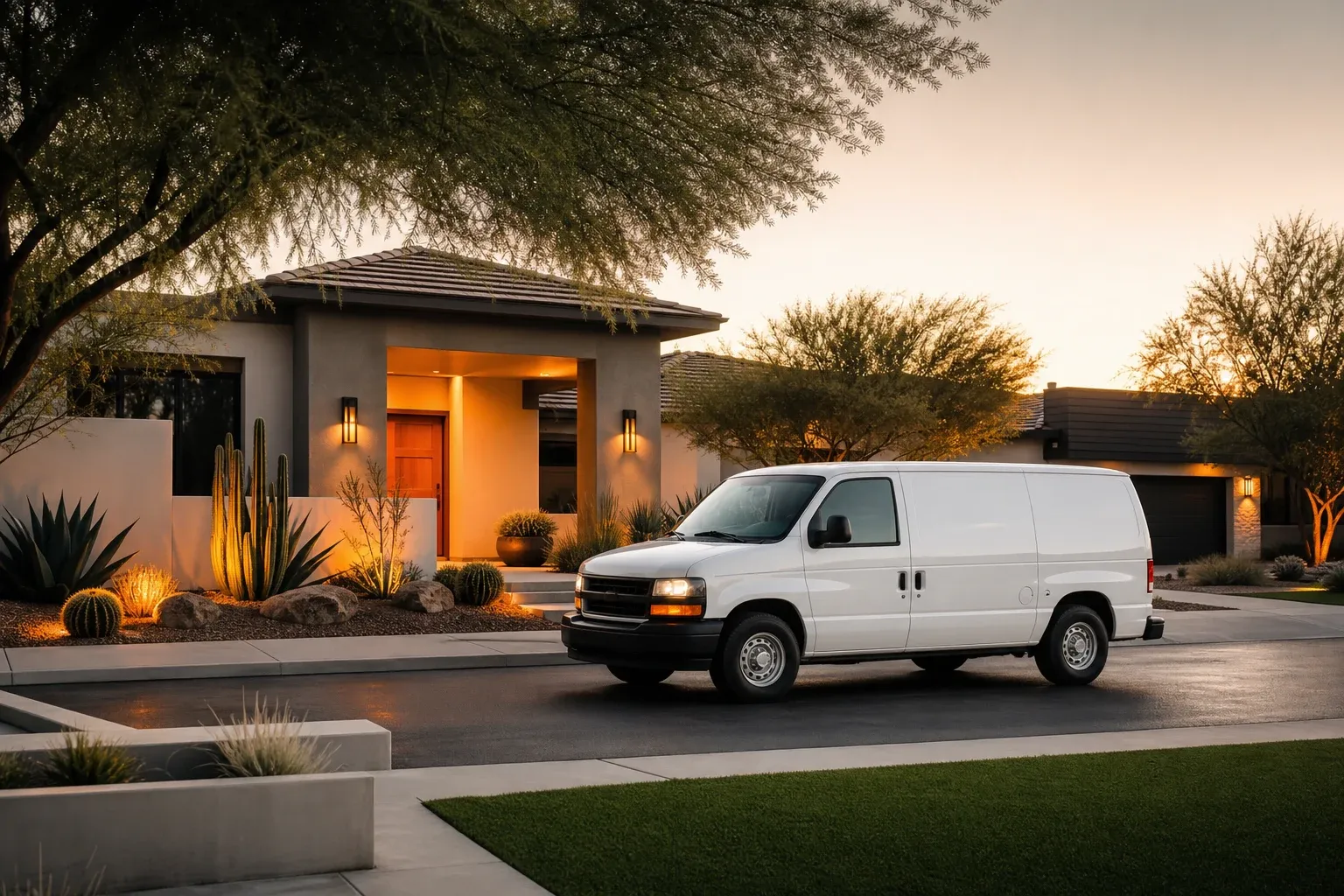
In plain terms
CactusLaunch builds home services websites for the urgency moment: mobile-first design that passes the five-second trust test, booking paths at every scroll depth, reviews and guarantees placed beside the ask, and seasonal campaign pages tracked so you know which ads book jobs.
What usually goes wrong
Why home services websites lose the people they attract
These are the failure modes we see most often in this category — each one is fixable, and each one is costing enquiries right now.
The site fights the customer’s thumb
Tiny tap targets, pinch-zoom text, and desktop-first layouts. The overwhelming majority of this traffic is mobile and in a hurry — a merely responsive site is not the same as one designed for that moment.
Slow pages lose urgent customers
In an emergency nobody waits for a hero slider to load. Speed is not a technical nicety here; it is the difference between a booked job and a competitor’s booked job.
Trust signals are on the wrong page
Licensing, guarantees, and reviews sitting on an About page do not exist. They need to be beside the booking action, where the hesitation actually happens.
Seasonal demand has no prepared pages
AC in June and furnaces in November are different campaigns with different intent. Sending both to a generic services page wastes the two windows where demand peaks.
The conversion paths that work here
How home services visitors actually convert
Not every category converts the same way. These are the paths we build, in the order they usually matter.
Book a service call (primary)
Visible at every scroll depth and thumb-sized. Most home services sites bury this behind a menu; it should be impossible to miss.
Emergency contact
A distinct, faster path with unmistakable availability information. Urgency traffic should never have to read a services page first.
Membership or maintenance plan signup
Recurring revenue deserves a real conversion path rather than a paragraph on a services page.
What we build
The home services build, in detail
Page architecture we typically build
- A page per core service (plumbing, HVAC, electrical, drains) with genuine depth
- Emergency page designed for zero-browse, immediate-contact behavior
- Maintenance plan or membership page — the highest-margin conversion many companies ignore
- Service-area pages with real local substance
- Seasonal campaign landing pages prepared ahead of the season
- Booking flow integrated with your scheduler
What visitors need before they act
- Licensing and insurance visible without hunting
- Reviews positioned next to booking actions, not quarantined on a testimonials page
- Honest response-time and availability expectations
- Real photography of trucks, uniforms, and crews — the visual proof of a real operation
- Clear service-area coverage so customers can self-qualify instantly
- Upfront pricing philosophy, even where exact prices are impossible
Intake and form considerations
- Service type and urgency first — everything else can wait for the callback
- Address or service-area check early, so unservable leads self-select out
- Keep the form ruthlessly short: this visitor has a problem right now
- Route to your scheduler or CRM where you have one; a tracked form to your inbox otherwise
Search and paid-traffic considerations
- Emergency and “near me” intent behave differently from planned-maintenance intent and need separate pages
- Local entity signals (service area, hours, business profile alignment) matter more here than almost anywhere else
- Seasonal content should be published and indexed before demand arrives, not during the spike
- Paid campaigns need per-service, per-season landing pages to avoid diluting expensive urgent-intent clicks
Platform and integration realities
- Scheduler integrations (ServiceTitan, Housecall Pro, Jobber, and similar) sit at the end of the conversion path
- Review-platform widgets are common performance offenders and are used selectively
- Many companies arrive on a marketing-vendor site they cannot edit or measure — migration is often the fastest win
The honest fit
Which launch fits a home service project
GrowthStack™ when the site itself needs to earn trust and speed. AdScale™ when the site is fine and the seasonal campaign funnel is the gap.
GrowthStack™
from $5,900
Typical launch: ~10–14 days from kickoff
Best for: Businesses running (or about to run) paid traffic.
Start with GrowthStackAdScale™
from $4,500
First pages live in about a week
Best for: Businesses already spending on ads whose website is the bottleneck.
Start with AdScaleHome services FAQ
Questions we get from this category.
Most of our work is referrals. Does the website still matter?
Referrals check you out online before they call. A referred lead who lands on a dated, slow site arrives with doubt you did nothing to earn. The site’s job is confirming the recommendation.
Can you work with our scheduling software?
Yes. The conversion path ends wherever you take bookings — your scheduler, your CRM, or a tracked form to your inbox. Where an integration is genuinely clunky, we design around it honestly instead of hiding it.
Do we need separate pages for each season?
For paid campaigns, yes — and prepared in advance. A furnace campaign pointed at a general HVAC page wastes the narrow window when that intent actually peaks.
Do you promise more booked jobs?
No. Demand is seasonal and market-driven. We build the part a website controls — being the company an urgent customer books instead of scrolling past — and we measure booking requests by campaign.
Other industries
We build for these categories too.
Dental & medical websites
See what we buildContractors websites
See what we buildLaw firms websites
See what we buildBrowse all industries · How we build for every category · What an ad landing page needs
From the resource library
The guides behind this build.
Be the company that looks like it shows up on time.
Tell us your services and service area. Your launch plan comes back with the architecture, the booking path, scope, timeline, and one flat number.
Prefer to talk it through first? Use the chat button — a real person replies.